Inside Culinary Class Wars: Korea's Netflix Star Chefs' Food Discovery in Taipei's Historic Nanmen Market

When the International Chefs Summit Asia (ICSA) invited four of Korea's most celebrated chefs from Netflix's breakout hit "Culinary Class Wars" to Taiwan, they turned to My Taiwan Tour to design an authentic cultural immersion experience. What started as a specialized food tour through Taipei's century-old Nanmen Market became a culinary time capsule that challenged everything these professional chefs thought they knew about familiar ingredients and cooking techniques.
Chefs Choi Hyun-seok (최현석) and Oh Sedeuk (오세득)—household names across Korea—along with Park Eun-young (박은영), the celebrated "Goddess of Chinese Cuisine," and Italian Michelin-starred master Fabrizio Ferrari, embarked on a specialized food tour that would reshape their understanding of Chinese diaspora cuisine and Taiwan's unique culinary identity.
Their guide, Jacky Cha, brought the perfect credentials for this cultural exchange: nearly 20 years of professional tour experience serving Taiwanese visitors to Korea, plus the lived perspective of a Korean son-in-law married into a Taiwanese family. His fluency in both Mandarin and Taiwanese, combined with a deep appreciation for both cultures' nuances, made him the ideal interpreter for helping Korean celebrity chefs discover Taiwan's culinary treasures.
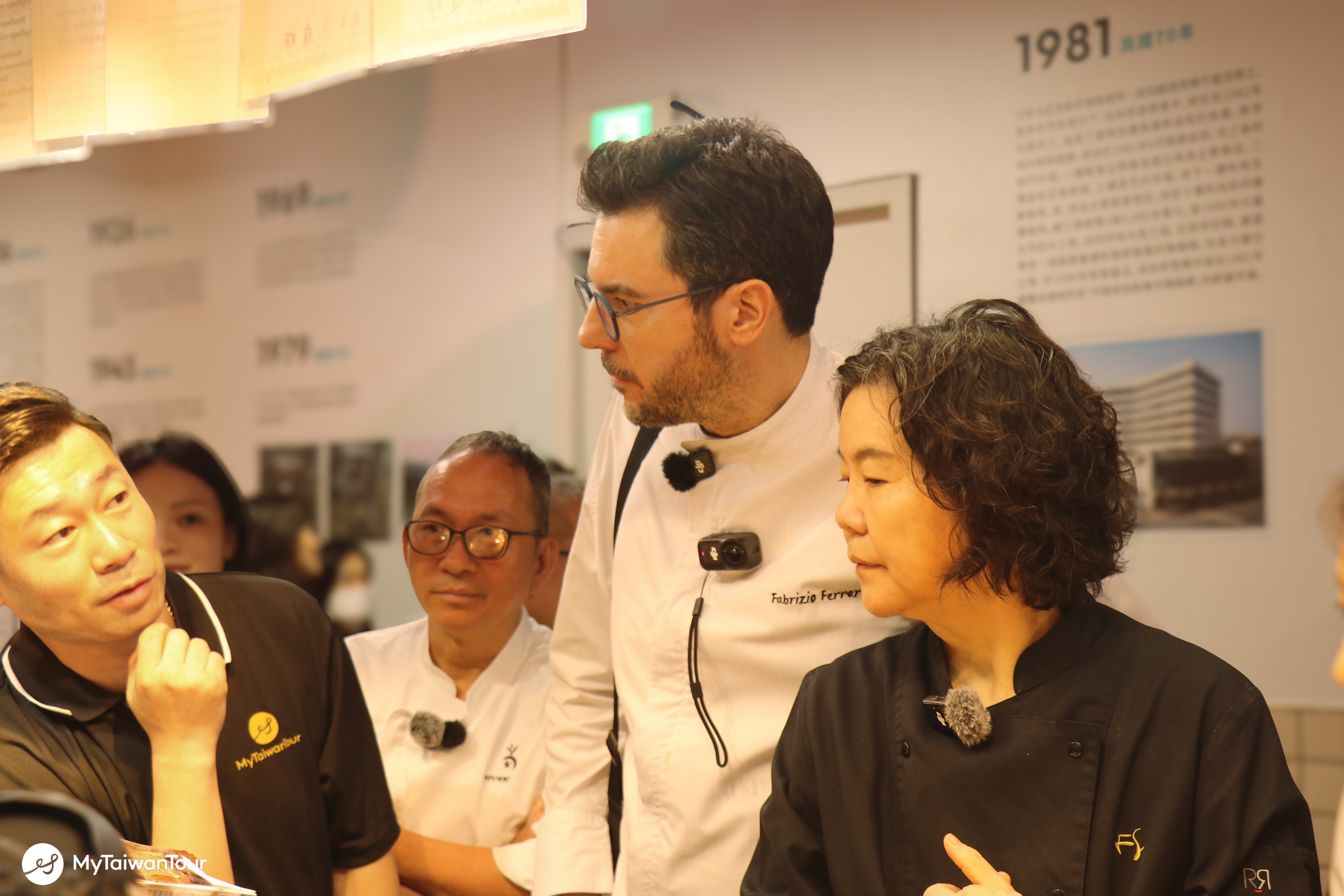
First Impressions: When Expectations Meet Reality
"They thought it would be a market where you buy vegetables and meat," explains Jacky, who witnessed the chefs' surprise firsthand. "But when they saw it was all ready-to-eat food in a modern building, they were amazed. This wasn't what they expected from a 'traditional market.'"
The initial shock was cultural as much as culinary. In Korea, markets are typically outdoor spaces where you purchase ingredients to cook at home. Nanmen Market's indoor, food-court-style setup—where centuries-old recipes are served fresh from individual stalls—represented an entirely different approach to food culture.
"The visual impact was huge," Jacky recalls. "Once they started tasting, their reactions were completely different from what I expected."
The Billion-Won Question: Where Familiar Meets Foreign
The tour's magic lay in its contradictions. At every stall, the chefs encountered ingredients they recognized, prepared in ways they'd never imagined.
Rice Cakes Reimagined
At Ho-Hsing Rice Cake Shop (合興糕糰店), the first stop revealed this cultural bridge perfectly. "Korea has similar rice cakes," Jacky explains, "but Korean ones are plain rice, served in large flat pieces. Taiwan's version surprised them—individual portions with sweet fillings inside."
Chef Park Eun-young's reaction was telling: the familiar exterior gave way to unexpected sweetness, creating what Jacky described as "a pleasant surprise that they found both strange and delicious."
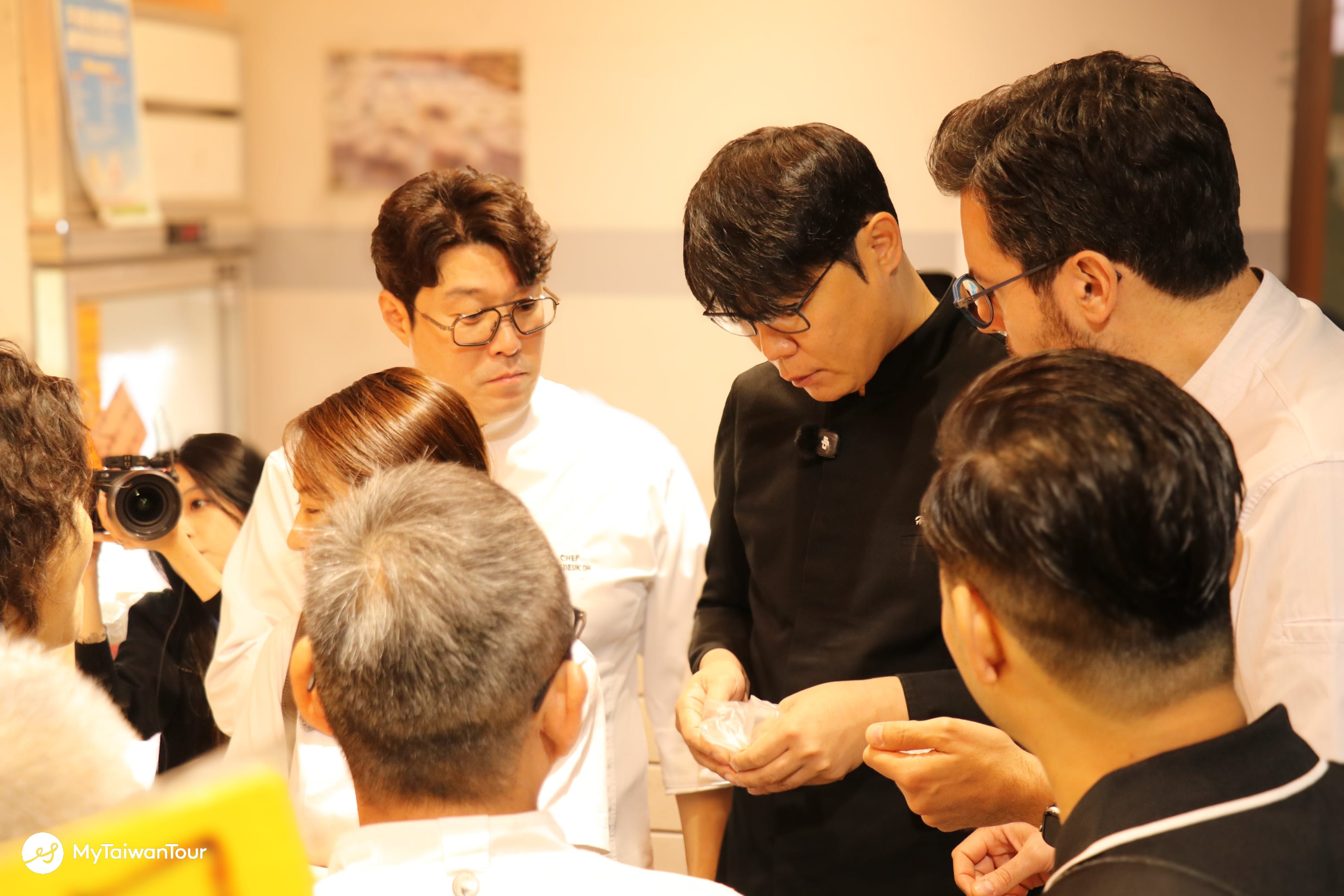
Cultural Bridges in Every Bite
Korean cuisine is famous for its banchan (반찬)—the colorful array of small side dishes that accompany every meal. For chefs Choi, Oh, and Park, seeing variety was familiar territory. But at Yi Xiang Zhai (逸湘齋) and Yi Chang Yu Fang (億長御坊), Taiwan's take on prepared foods revealed an entirely different philosophy.

The Korean chefs lingered longest at the third stop, Yi Chang Yu Fang, drawn by the sheer diversity of prepared dishes displayed like jewels in a case. Among the many offerings, one dish stopped them in their tracks: snow vegetable with bean curd sheets (雪菜百葉).
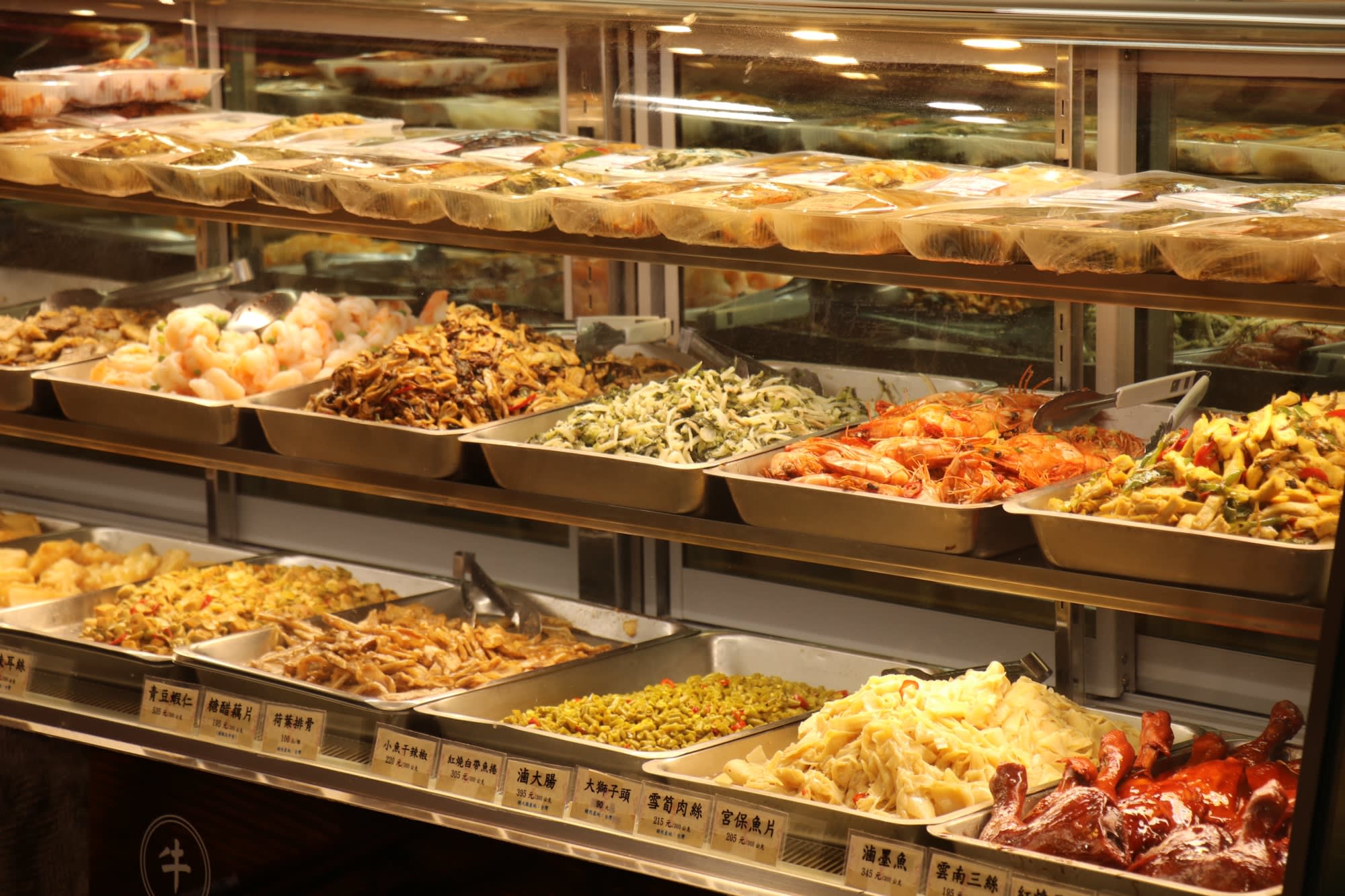
"Wait, you use this vegetable like this?" Chef Oh asked, examining the glistening green leaves mixed with silky bean curd. In Korea, they knew this same mustard green only as an ingredient for gat-kimchi—fermented into spicy, intensely sour pickles. Here, it was gently cooked with bean curd sheets, seasoned but not fermented, creating layers of texture and subtle flavor.
The chefs tasted carefully, their professional instincts kicking in. Where they expected the singular punch of fermentation, they found balance—the slight bitterness of the greens complemented by the neutral canvas of bean curd, each element maintaining its identity while harmonizing with the others.
This discovery highlighted Nanmen Market's unique role: like Korean households who stock up on banchan to save cooking time, busy Taiwanese families can purchase an entire spread of expertly prepared dishes here, then either take them home or enjoy them immediately in the market's upstairs seating area—a concept that impressed the chefs with its practicality and quality.
The Zongzi Champion: When Korean Meets Italian Enthusiasm

At Li Jia Huzhou Zongzi (立家湖州粽), Korean chef Choi Hyun-seok found his moment of pure culinary joy. The leaf-wrapped parcels sparked an enthusiasm that was infectious—even for his international colleague.
Choi's excitement was immediate and professional. He examined the parcels carefully, asked detailed questions about northern versus southern wrapping styles, and peppered the vendors with inquiries about filling variations. "These would be huge in Korea," he declared, his conviction evident as he purchased several to take home.
The contrast with Korean cuisine was striking. "Korea has something similar," Choi explained to his fellow chefs, "but ours are simple—just nutritious rice wrapped in lotus leaves. These..." he gestured to the hefty zongzi (rice dumpling 粽子) with their complex fillings of meat, egg yolk, and glutinous rice, "...these are like complete meals."
Italian chef Fabrizio Ferrari, observing his Korean colleague's genuine delight, sampled the zongzi with equal curiosity. His verdict aligned perfectly with Choi's enthusiasm: "This represents Taiwan," he concluded. "Very special—other countries don't have this." The Italian master's endorsement of what the Korean chef had discovered created a moment of cross-cultural culinary consensus that transcended any single tradition.
The Healing Bowl: When Soup Becomes Medicine

At Nanmen Beef & Lamb (南門牛羊肉品), the chefs gathered around steaming bowls of pickled cabbage with pork belly soup, unaware they were about to experience something unexpectedly therapeutic. Chef Choi Hyun-seok, who had been feeling sluggish from their packed Taiwan schedule, took his first sip and paused, surprised.
"This reminds me of our hangover soups," he told his colleagues, taking another careful taste. "But cleaner, lighter." The comparison was apt—Korean culture features many restorative soups, including the beloved bean sprout soup made with clear fish stock, designed to revive tired bodies and foggy minds.

(Image for illustration purposes: Taiwanese Sour Cabbage Pork Belly Hotpot 酸菜白肉鍋)
As the Korean chefs discussed the familiar-yet-different broth, the tender beef caught their attention. Thin slices of fresh beef, briefly blanched in the clear soup using Taiwan's signature bone-broth technique, emerged perfectly cooked in seconds. "How is it so tender so quickly?" Chef Oh wondered aloud, his professional instincts engaged.
Taiwan's soup culture runs deeper than mere sustenance—it's medicine in a bowl. Traditional Chinese medicine principles guide many soup preparations, incorporating herbs and ingredients to boost qi (energy 氣) and provide warming or cooling effects suitable for the island's changing seasons.
The chefs also encountered their first egg dumplings (蛋餃)—delicate pouches of egg wrapper encasing seasoned meat that had no Korean equivalent. "Egg as a wrapper for meat?" Chef Oh marveled, examining the golden parcels. "This technique is completely new to us."
By the meal's end, Choi felt revitalized. "My energy completely came back," he reflected, understanding instinctively why soup culture holds such importance in both Korean and Taiwanese traditions.
The Perfect Boba: Why Origins Matter
Even bubble tea—now a global phenomenon—provided lessons in authenticity during the tour's final beverage stop. While the Korean chefs' reactions were more measured than with other discoveries (bubble tea has already conquered Korea), the experience highlighted why Taiwan's original version remains unmatched.
"Taiwan's pearls are still more Q," Jacky observes, using a distinctly Taiwanese term that captures something no English word quite achieves. "Q" describes the perfect chewy-bouncy texture that Taiwan has spent decades perfecting—a quality that global franchises struggle to replicate despite standardized recipes.

The difference extends beyond texture. Having guided Taiwanese tourists for nearly two decades, Cha has witnessed countless visitors discover that even familiar drinks taste remarkably different at their source. "The milk is different, the tea quality is different—you can taste it immediately."
This isn't just national pride. European and American visitors consistently express surprise at how Taiwan's bubble tea surpasses versions in their home countries. The mastery lies in foundational elements: precise cooking techniques to achieve a perfect pearl texture, high-quality dairy, and decades of refinement in balancing the tea-to-milk-to-sweetness ratios.
Despite being thoroughly satisfied with their extensive market tour, all four chefs finished their entire cups—a quiet but powerful endorsement of the hometown original.
Cultural Surprises and Sweet Revelations
The tour's most endearing moments came during dessert, but also showcased the thoughtful planning that distinguished this experience from typical tourist stops.
The highlight was an unexpected gift from Ho-Hsing Rice Cake Shop: a massive longevity peach cake inscribed with "Congratulations on Your Marriage," specifically for chef Park Eun-young, who had recently gotten married.
This wasn't just any dessert—it was a deep dive into Chinese cultural symbolism. The peach design draws from ancient mythology where magical peaches (蟠桃) from the Queen Mother of the West's garden granted immortality to those who ate them. Over centuries, this evolved into Taiwan's tradition of celebratory peach-shaped cakes for weddings, birthdays, and other auspicious occasions.
"When she realized the characters were specifically written for her, she was genuinely touched," Jacky recalls. "She found the personal attention very moving and surprising." The custom-made inscription demonstrated another aspect of Taiwanese culture: the willingness to personalize traditional foods for special moments, requiring advance orders and careful coordination.

Cutting open the large peach revealed twelve smaller ones inside—a detail that fascinated all the chefs with its craftsmanship and symbolism of abundance and completeness.
When presented with sugar apples (custard apples), the chefs initially struggled with the fruit's unusual texture and seed-spitting requirement. "They had no idea you needed to spit out the seeds," Cha laughs. "The atmosphere was very natural and funny—they were learning as they went."
Fresh lychees provided another revelation, particularly for the Korean chefs who had only experienced frozen or canned versions. "In Korea, lychees are only available frozen," Cha explains. "They were amazed by how different fresh ones tasted—they kept eating one after another."
Beyond Tourism: The My Taiwan Tour Difference
What distinguished this culinary exploration from typical tourist experiences was the depth of cultural context provided at every turn. Guide Cha's expertise went far beyond translation—he served as a cultural interpreter who could explain not just what the chefs were tasting, but why these flavors existed in Taiwan.
When the chefs immediately recognized the market's cuisine as "Chinese-style" but noticed it tasted different from their mainland China experiences, Cha was ready with the historical context that made everything click into place.
"This market preserves the cooking traditions of immigrants from Jiangsu and Zhejiang provinces," he explained, "but these weren't just any immigrants—many were soldiers who came to Taiwan in the 1940s and gradually settled down, marrying local Taiwanese women and raising families here."
This historical foundation explained everything the chefs were experiencing. Over generations, these traditional recipes absorbed Taiwanese ingredients, local preferences, and the influence of Taiwanese family cooking, creating a unique culinary fusion that exists nowhere else in the world.
The success of this culinary exploration highlights what sets professional tour services apart from casual sightseeing. Every detail—from the market's historical significance to the surprise longevity cake—demonstrated thoughtful planning and deep cultural knowledge.
"These weren't random food stops," Cha explains. "Each stall represented different aspects of Taiwan's culinary evolution. We wanted them to understand how this market preserves and transforms traditional Chinese regional cuisines while creating something distinctly Taiwanese."
For Korean celebrity chefs accustomed to professional-level cultural exchanges, this represented exactly what discerning travelers seek: authentic experiences that provide genuine cultural insight, not just photo opportunities.
For the Culinary Class Wars stars, Nanmen Market became more than a tour stop—it became a masterclass in how familiar ingredients can tell completely different stories when filtered through different cultural lenses. Under the expert guidance of someone who understands both cultures intimately, they discovered not just new flavors, but new ways of thinking about food, culture, and the stories that connect them.
As Chef Choi Hyun-seok noted with his determination to bring zongzi back to Korea, and Fabrizio Ferrari observed about Taiwan's unique culinary signatures, some experiences are so distinctive to a place that they become definitive. In Taiwan's case, that definition emerges most clearly when expert guides can explain not just what you're tasting, but why it exists and what it means.

Ready to experience Taiwan's culinary heritage with the depth and insight that professional chefs demand? My Taiwan Tour specializes in creating authentic, culturally rich experiences that transform casual sightseeing into meaningful cultural exchange. With guides like Jacky Cha—bicultural experts who understand both the technical aspects of cuisine and the historical stories behind every dish—discover Taiwan through the eyes of those who truly understand food as culture, history, and art.
Whether you're seeking hidden market gems, cultural deep dives, or experiences that satisfy the most discerning palates, My Taiwan Tour creates journeys that go far beyond typical tourist attractions. Contact us to discover what Taiwan's culinary story can tell you about food, culture, and the beautiful complexity of cross-cultural discovery.